
 by Riyom Films
 What if the most dangerous part of a cross-chain swap is not the bridge, the token, or the network fee, but the moment your wallet asks you to approve something you have not fully understood? DeFi security is often described as a custody problem: keep the seed phrase private and use a reputable wallet. That is necessary, but incomplete. Modern attacks frequently target transaction interpretation, token approvals, malicious websites, compromised interfaces, and fragmented cross-chain workflows.
For US-based DeFi users, the practical question is therefore not simply which wallet is safest. It is which security model fits the activity: a browser extension for frequent interaction, a hardware wallet for stronger key isolation, or a combination of both. Cross-chain swaps make that choice more important because assets, contracts, bridges, and signing requests can span several independent systems. The right mental model is to treat a wallet as both a key manager and a transaction review surface.
Why Cross-Chain Swaps Increase the Security Burden
A conventional exchange between two assets on one network may involve a decentralized exchange contract, a token approval, and a swap call. A cross-chain swap can add a source-chain transaction, a bridge or messaging protocol, a destination-chain transaction, a relayer, and sometimes a separate approval on the receiving network. Each component introduces assumptions about software, liquidity, permissions, and operational reliability.
The important distinction is between asset price risk and execution risk. Price risk is the possibility that the value of an asset changes while a transaction is pending. Execution risk is the possibility that the transaction does something other than what the user intended, fails after fees are paid, reaches an unexpected contract, or leaves a broad token allowance in place. A wallet cannot eliminate market volatility, bridge failure, or smart-contract bugs. It can, however, help the user inspect the transaction before signing and reduce avoidable mistakes.
Cross-chain systems also complicate the meaning of “the same token.” A token represented on one network may be a different contract from an asset with a similar name on another. Wrapped assets, canonical assets, bridged representations, and look-alike tokens can appear similar in a wallet while carrying different issuer, redemption, or contract risks. Checking only the ticker symbol is therefore weak verification. Contract address, network, destination, and expected amount matter more.
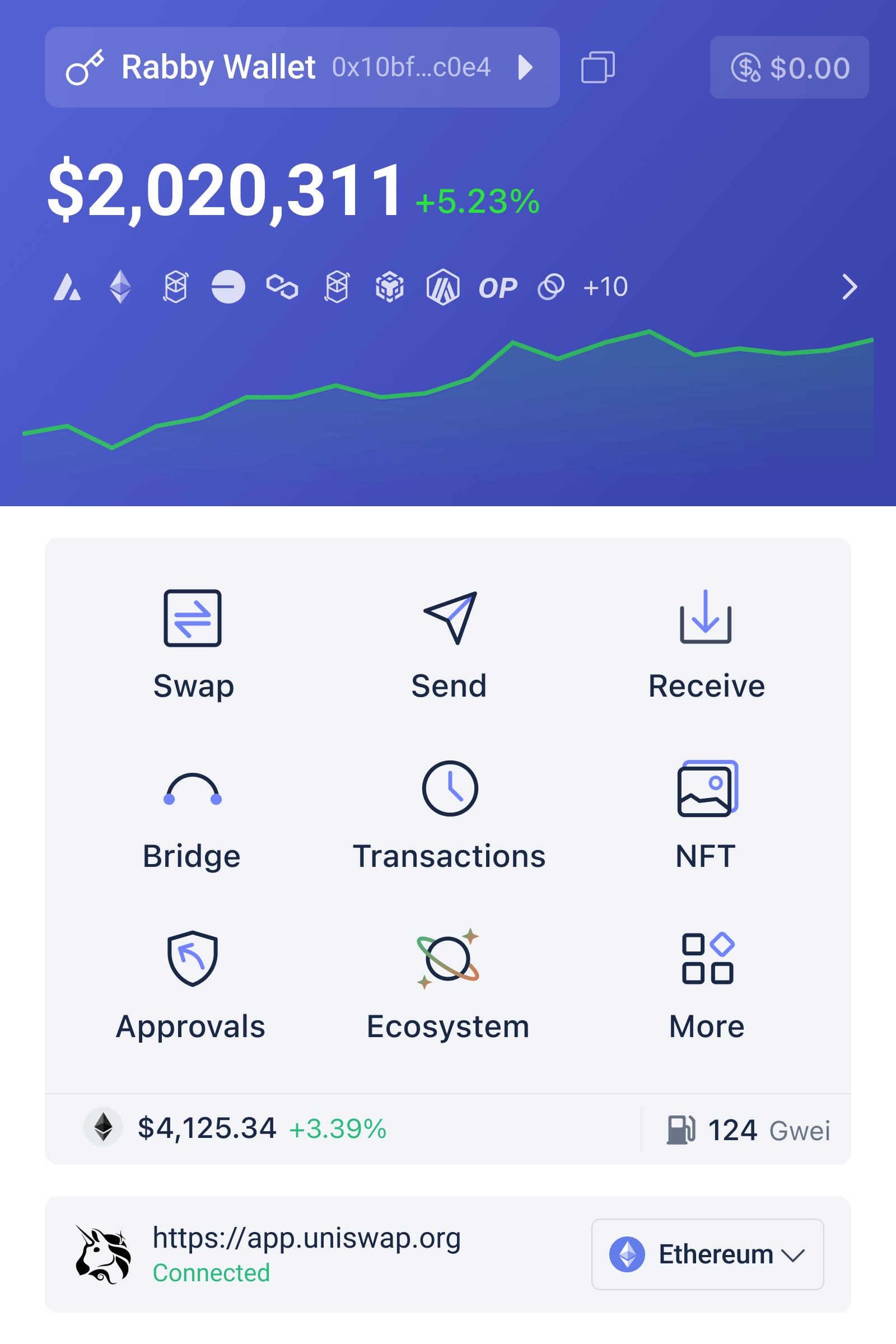
This is where transaction-aware wallets can be useful. A browser extension such as Rabby is designed for users who interact directly with decentralized applications in a browser. Users considering a rabby extension download should treat installation as the beginning of a security process, not its conclusion: obtain the software from a trusted source, verify the extension before importing or creating a wallet, and understand which account is being used before connecting to a DeFi application.
Browser Extension Versus Hardware Wallet
A browser wallet and a hardware wallet protect different parts of the problem. A browser extension provides speed and integration. It can connect to decentralized applications, display network information, and make frequent swaps practical. Its main exposure is the computer and browser environment: malicious extensions, phishing pages, malware, misleading pop-ups, and user fatigue can all influence what gets signed.
A hardware wallet isolates private-key operations in a separate device. The private key is generally designed not to leave that device, which reduces the impact of some computer compromises. That is a meaningful advantage for larger balances or long-term holdings. Yet hardware wallets are not magic shields. If a user approves a malicious contract, the device may still sign the transaction. If the display is difficult to interpret, physical key isolation may coexist with poor transaction comprehension.
The comparison is therefore not “unsafe browser wallet versus safe hardware wallet.” It is closer to convenience with more environmental exposure versus stronger key isolation with more operational friction. A hardware wallet can be connected to a browser interface, combining cold-key protection with a familiar DeFi workflow. The trade-off is that users must manage device backups, firmware procedures, address verification, and compatibility across applications. A lost device may be recoverable with the seed phrase; a leaked seed phrase is a different and far more serious event.
For active DeFi users, a useful structure is to separate funds by purpose. A transaction wallet can hold only the amount needed for current activity. A savings or treasury wallet can hold longer-term assets and interact rarely, ideally through stronger key-management procedures. This separation does not prevent every attack, but it limits the blast radius when an address, approval, or application session becomes unsafe.
Approvals Are a Hidden Form of Custody
Many users understand that signing a transfer sends funds. Fewer appreciate that an unlimited token approval can authorize a contract to move tokens later, without requiring a new approval for every swap. In practical terms, an approval creates a continuing permission relationship between the token, the approved contract, and the wallet. It is not identical to handing over custody, but it can create a similar economic exposure if the contract is malicious or later compromised.
This leads to a sharper security rule: review permissions, not only transactions. Before approving a token, ask which contract is receiving the allowance, whether the amount is limited, whether the contract is the intended protocol component, and whether the approval is still necessary after the activity ends. Revoking an approval can itself require a network transaction and a fee, so prevention is usually simpler than later cleanup.
Transaction simulation and warning systems can improve this review process by translating contract calls into more understandable outcomes. Their value is greatest when they expose a mismatch between the user’s intention and the proposed result—for example, a swap that appears to send one asset but would transfer another, or a request that grants a broad permission. Still, simulations are not guarantees. They depend on available data, the accuracy of contract interpretation, the state of the network, and assumptions about what happens after the transaction is included.
A simulation can also miss risks that emerge outside the immediate call. A bridge may later experience a validator, relayer, or messaging failure. A protocol may be technically functioning while its economic incentives deteriorate. A token may have administrative controls that change its behavior. Security tools should therefore be treated as a second set of eyes, not as an insurance policy.
Three Security Models for DeFi Users
1. Single-wallet convenience
Using one browser wallet for every network and application is simple. It reduces account confusion and makes routine swaps fast. The disadvantage is concentration: one compromised seed phrase, one careless signature, or one dangerous approval can affect the user’s entire DeFi portfolio. This model may be reasonable for small experimental balances, but it becomes increasingly difficult to justify as the value or complexity of activity grows.
2. Segmented browser wallets
Separate wallets for trading, testing, airdrop-related activity, and long-term holdings create clearer boundaries. The user retains browser convenience while reducing the amount exposed to unfamiliar contracts. The cost is administrative: users must verify the active account, avoid sending funds to the wrong address, and maintain disciplined records. Segmentation works only if the user understands the boundary; multiple accounts do not help when the same seed phrase controls all of them.
3. Hardware-backed account with a transaction interface
This model places a higher-value account behind a hardware device while using a browser extension as the interface for DeFi applications. It offers stronger protection against some forms of computer compromise, but it does not remove the need to inspect destination addresses, contract permissions, network selection, and expected outcomes. It is best suited to users who can tolerate additional confirmation steps and who are prepared to maintain secure backups and recovery procedures.
These models are not mutually exclusive. A sensible US user might keep everyday activity in a limited transaction wallet, use a hardware-backed account for substantial holdings, and avoid connecting the long-term account to experimental applications. The correct choice depends on balance size, transaction frequency, technical confidence, and the user’s ability to recover from mistakes.
A Practical Verification Routine Before Signing
Before a cross-chain swap, begin with the destination. Confirm the source network, destination network, asset contract, and receiving address. Then inspect the route: identify whether the transaction uses a bridge, an aggregator, a liquidity pool, or a combination. A shorter route is not automatically safer, but every additional component creates another place where assumptions can fail.
Next, examine the permission request. If the application asks for an unlimited approval when a specific amount would suffice, pause. If the site requests a signature that appears unrelated to the swap, do not treat a familiar interface as proof of legitimacy. Wallet connection is not authorization, and a message signature can have consequences even when it does not look like a conventional transaction.
Finally, compare the expected result with the actual wallet prompt. Check the network, token, amount, recipient, slippage setting, and fee. Slippage is the tolerated difference between the expected and executed exchange rate; setting it too low may cause failure, while setting it too high can make adverse execution more likely. There is no universally correct setting because liquidity, volatility, and route design differ. What matters is recognizing that slippage is an execution parameter, not a security guarantee.
After completion, verify the destination balance and review remaining approvals. A successful transaction hash proves that a transaction was included, not that the economic outcome was satisfactory or that future permissions are safe. This distinction is easy to miss when users focus only on whether the wallet displays “confirmed.”
What Wallet Security Tools Cannot Solve
The largest boundary condition is that wallet security is layered. A well-designed extension cannot repair a fraudulent token, a vulnerable bridge, a compromised protocol administrator, or a phishing domain that the user deliberately authorizes. Nor can it determine whether a yield opportunity is economically sustainable. Those are protocol, market, governance, and user-judgment questions.
There is also a usability trade-off. More warnings can improve safety, but excessive or unclear warnings may train users to approve prompts mechanically. Security depends not only on detection quality but also on whether the explanation is understandable at the moment of decision. A warning that names a contract but does not explain the consequence may be technically accurate and practically weak.
The near-term implication is conditional: if cross-chain applications continue to compress complex routes into one-click interfaces, the quality of transaction interpretation will become more important, not less. Users should watch for clearer contract explanations, better approval management, more reliable simulation, and stronger separation between account identities. These developments could reduce routine mistakes, but they will not eliminate the need to verify destinations and limit exposure.
Frequently Asked Questions
Is a browser extension enough to protect funds during cross-chain swaps?
No. A browser extension can improve account access and transaction review, but it cannot guarantee that a bridge, token, application, or user-approved contract is safe. Use limited balances for active transactions, verify the route and permissions, and consider hardware-backed protection for larger holdings.
Are hardware wallets always safer than browser wallets?
They generally provide stronger private-key isolation, but safety also depends on what the user signs and how clearly the transaction is reviewed. A hardware wallet can still authorize a malicious contract. Its strongest benefit is reducing certain key-extraction risks, not replacing careful transaction verification.
Should token approvals be revoked after every swap?
Not necessarily. Revoking approvals can reduce ongoing exposure, but it costs network fees and may add operational complexity. The more useful rule is to avoid unnecessary unlimited approvals, review which contracts have permission, and revoke permissions that are no longer needed or that belong to applications the user no longer trusts.
The central lesson is simple but easy to neglect: wallet security is not merely about where a private key is stored. It is also about what the key is asked to authorize, how much capital is exposed, and whether the user can understand the transaction before signing. In cross-chain DeFi, a disciplined separation of funds, careful permission review, and deliberate route verification often provide more practical protection than relying on any single wallet feature.
